Purpose
What a student of Islamic law needs is scattered: a jurist’s life is told in the ṭabaqāt works, the list of his writings in bibliographies, and the research on him and his works in catalogues in several languages. Fukahâ brings this information together in one place, with full bibliographic records and their sources.
Sections
- Classical Sources. Works of law, legal theory and fatwa written by the jurists, with author, date of death and school.
- Modern Sources. Present-day monographs on Islamic law, critical editions and translations.
- Theses. Master’s and doctoral theses on Islamic law written in Turkey.
- Articles. Articles on Islamic law published in peer-reviewed journals.
- Jurists. Biographies of jurists taken from the ṭabaqāt literature. Every jurist has his own page, with his works, teachers, students and the theses about him.
- Jawāhir. Ibn Abi al-Wafa al-Qurashi’s (d. 775/1373) al-Jawāhir al-muḍiyya fī ṭabaqāt al-Ḥanafiyya, entry by entry. Each letter and appended book can be read on its own page, and all entries can be searched in one table. 358 of the jurists on the site are linked to their entry, which is also shown on the jurist’s page.
- Map. Where the jurists were born, studied, taught, served as judges and died, on one map with the historical regions.
- Network. The ties between teachers and students, drawn as a network along the centuries. Each jurist’s page also shows his own chain, two generations up and down.
- News and Blog. What is new on the site; writing on fiqh, its sources and method.
All collections work the same way: each record is a table row and the full record is shown in columns. Click a column heading to sort, narrow the list with the search box and filters, and download the result as CSV.
Where to start
- Meet a jurist. Every jurist has a page of his own. Al-Jaṣṣāṣ’s page, for example, brings together his works, teachers and students, the 53 theses written about him and al-Laknawī’s Arabic entry.
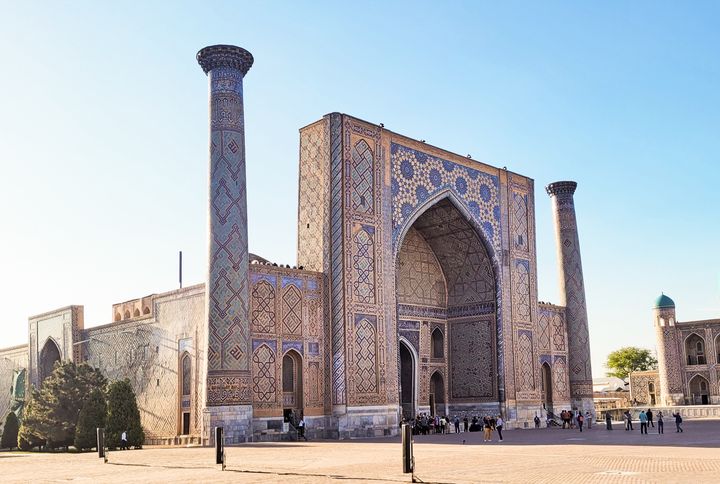
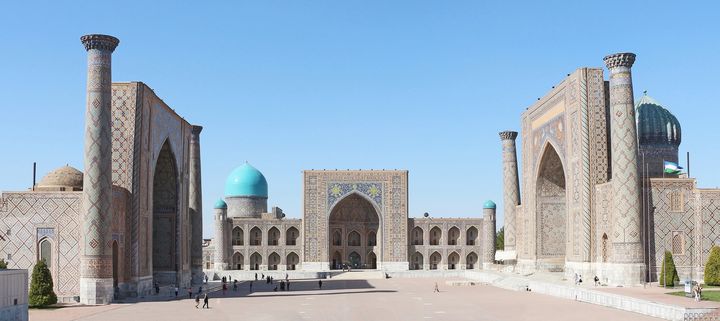
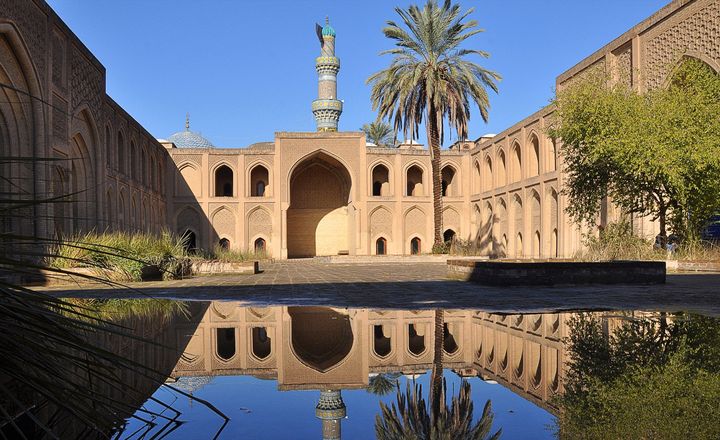
- Explore the map. Click a city on the map to list the jurists tied to it. Bukhara, Samarkand and Baghdad are good places to start.
- Walk through a century. Use the century filter of the Jurists table to list, say, the jurists who died in the 5th century AH.
- Research a topic. Type a topic, a jurist or a title into the search box of the Theses table. With several words, only theses containing all of them are listed.
- Come back. The “Jurist of the day” on the home page changes daily, and what is new is also published as an RSS feed.
Sources
| Data | Source |
|---|---|
| Biographies and classical works | Abū l-Ḥasanāt ʿAbd al-Ḥayy al-Laknawī (d. 1304/1887), al-Fawāʾid al-bahiyya fī tarājim al-Ḥanafiyya, Cairo: Maṭbaʿat Dār al-Saʿāda, 1324. |
| al-Jawāhir al-muḍiyya | Ibn Abi al-Wafa al-Qurashi (d. 775/1373), al-Jawāhir al-muḍiyya fī ṭabaqāt al-Ḥanafiyya, Karachi: Mir Muhammad Kutub Khana. The text is the digital copy in the OpenITI corpus (CC BY-NC-SA 4.0). Entries were matched with the jurists on the site by hand. |
| Theses | YÖK National Thesis Centre (Turkey). Records, abstracts and full-text links follow the YÖK entry. |
| Images | Wikimedia Commons; public domain or openly licensed. Details below. |
| Coordinates | al-Ṯurayyā Gazetteer (CC BY 4.0). The 34 places it does not cover, mostly towns of Anatolia and the Balkans, are placed approximately. |
| Historical regions | Georgette Cornu, Atlas du monde arabo-islamique à l’époque classique (Leiden 1983), as digitised in al-Ṯurayyā. |
| Base map | Natural Earth (public domain), drawn with Leaflet. |
| Articles | A DergiPark article search export: citation, DOI, abstract and keywords. The jurists the articles study were matched by hand. |
| Symposium notices | The DAVET symposium list and the organisers’ pages. Posters belong to the organisers. |
| Classical texts, reading and search | The OpenITI corpus (KITAB project), CC BY-NC-SA 4.0. Works and authors were matched with the OpenITI records; uncertain matches were checked by hand. The texts are not stored on this site; they are fetched from their OpenITI files when read or searched. |
Method
Dates. Hijri dates are given with their Gregorian equivalent as “534/1139-40”. The Gregorian equivalent is computed with the tabular Islamic calendar.
Names. Jurists’ names are given in a simple transliteration for readability; the Arabic original has its own column. Work titles and the names of teachers and students also have a simple Turkish reading, written by hand.
Network. Al-Laknawī often names a teacher or student briefly: “Abū Yūsuf”, “the author of the Hidāya”, “his father Ḥammād”. Where such a name certainly belongs to a jurist with an entry, it is linked to his page; where we were not sure, the person is kept separate.
Search. Table search ignores case, diacritics and Arabic vowel signs: “fawaid” finds “Fawāʾid”.
Data
Every table on the site is read from an open JSON file. Other websites and applications can use these files directly; GitHub Pages serves them so that other sites may read them. Please cite the source. Data that comes from OpenITI is under OpenITI’s licence (CC BY-NC-SA 4.0, non-commercial use).
| File | Contents |
|---|---|
/data/fukaha.json |
Jurists: id, name (tr/en/ar), death/deathM (Hijri/Gregorian), century, book (fevaid or cevahir), source. For those from al-Jawāhir, cv points to their entry in the book. |
/data/klasik-eserler.json |
Classical works: title, author, authorId (the jurist’s id), death, oi (the OpenITI text id, when there is one). |
/data/fevaid.json, /data/cevahir.json |
The entries of the two biographical dictionaries: page, letter, year of death and linked jurist. |
/data/tezler.json, /data/makaleler.json |
Theses and articles, with their bibliographic records. |
/data/openiti.json |
The OpenITI texts of the works and jurists: title, author, word count, edition and raw text address (raw) of each. |
/data/ara/books.json, manifest.json |
The books in the search index and the format of the index. The passage table and index files are described in tools/build_search.py. |
Example: to get the jurists of al-Fawāʾid in an application
const jurists = await fetch('https://fukaha.github.io/data/fukaha.json').then(r => r.json());
const fawaid = jurists.filter(j => j.book === 'fevaid');
Corrections and contributions
If you find a mistake or a gap in a record, or want to suggest a work that is missing, please tell us on GitHub. Every correction makes the guide more reliable for everyone.